
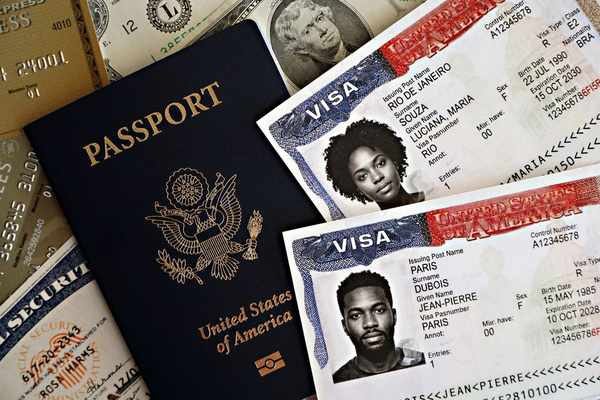
An L-1 visa allows a multinational employer to move an eligible employee from an overseas operation to a related office in the United States. Unlike the H-1B route, this is not a general recruitment visa or a lottery for outside applicants. The transfer must connect an existing international employment relationship with a qualifying U.S. position.
Who Can Qualify for an L-1 Transfer?
The U.S. employer and overseas employer generally must have a qualifying parent, branch, subsidiary, or affiliate relationship. They must also be doing business in the United States and at least one other country throughout the employee’s L-1 stay, subject to special rules for new U.S. offices.
The employee generally needs at least one continuous year of qualifying full-time employment abroad with the related organization within the relevant preceding three-year period. Time physically spent in the United States normally does not count toward that foreign-employment year. Special lookback rules can apply to periods spent in the United States working for the qualifying group.
Finally, the proposed U.S. job must be managerial, executive, or require specialized knowledge. The employee cannot independently petition for an L-1 transfer; the qualifying employer sponsors the case.
L-1A Versus L-1B: What Changes?
L-1A for Executives and Managers
The L-1A executive visa category also covers qualifying managers. Executives generally direct an organization’s management or major functions and exercise substantial decision-making authority. Managers may supervise qualifying professional employees or manage an essential function at a senior level. A managerial title or a list of routine operational tasks is not enough. USCIS examines what the person actually does and how the business supports that role.
L-1B for Specialized Knowledge Employees
The L-1B specialized knowledge category covers workers with special knowledge of the company’s products, services, research, equipment, techniques, or other interests, or advanced knowledge of its processes and procedures. Technical skill by itself is insufficient if the petition cannot explain what makes the knowledge qualifying and why the U.S. position uses it.
A company might transfer a regional operations director under L-1A, while moving a product architect familiar with a proprietary global platform under L-1B.
Documents That Make an L-1 Petition Persuasive
The employer should assemble documents that connect three stories: the corporate relationship, the worker’s qualifying overseas history, and the U.S. assignment. Corporate ownership records, organization charts, business registrations, contracts, and financial or operational records can establish the relationship and ongoing activity.
For the employee, useful records include payroll statements, employment verification, reporting lines, detailed past and proposed job descriptions, and examples of decisions or company-specific knowledge.
For example, a software company transferring an L-1B engineer should explain which internal architecture the engineer helped build, how its U.S. team depends on that expertise, and what supporting project records demonstrate the claim. Simply saying the engineer is highly skilled leaves the central eligibility question unanswered.
How the Application Process Works
Employer Petition and USCIS Review
For a standard individual case, the employer files Form I-129 with the L classification supplement and supporting evidence. USCIS may approve the petition, deny it, or request additional evidence. The company should check current forms, filing fees, and any available premium-processing rules before submission, because these can change.
Visa Interview or Change of Status
If the employee is overseas and needs an L visa, they normally complete Form DS-160, follow the relevant U.S. consulate’s appointment instructions, and present the required petition information and supporting documents. An approved petition does not itself guarantee visa issuance or admission at the border.
An eligible person already inside the United States may instead be able to request a change of status through the employer’s petition. That changes immigration status domestically; it does not automatically place a visa stamp in the passport for later travel.
When a Blanket Petition Helps
A blanket petition can simplify repeat transfers for established corporate groups that meet specific organizational and business-size requirements. USCIS first approves qualifying entities, rather than deciding every employee’s eligibility through a new individual corporate-relationship petition.
Qualifying employees then use the blanket process, generally including Form I-129S and consular review when applying abroad. Specialized-knowledge transfers through a blanket petition have additional professional-position requirements. Blanket approval is not an automatic visa: each transferee must still independently qualify, and applicable consular fees remain relevant.
Transfers to a Newly Established U.S. Office
A foreign company can sometimes transfer eligible personnel to establish a U.S. office, even before that office has a long operating history. These cases need evidence of secured premises, business plans, financial capacity, and the proposed employee’s role. A new-office L-1A case must show the operation is expected to support an executive or managerial position within one year.
Initial new-office approvals are generally limited to one year, and extensions require evidence of real progress.
Length of Stay and Family Considerations
For established-office petitions, initial L-1 approval is commonly available for up to three years, with extensions usually granted in increments of up to two years. The general maximum is seven years for L-1A and five years for L-1B, although prior time in certain statuses and exceptions can affect calculations.
Spouses and unmarried children under 21 may qualify for L-2 dependent status. Qualifying L-2 spouses are employment-authorized incident to status, with appropriate documentation such as an unexpired I-94 showing L-2S classification. Children in L-2 status are not employment-authorized merely because they are dependents.
Can an L-1 Transfer Lead to a Green Card?
Yes, but permanent residence is a separate process. Some L-1A managers and executives may qualify for the EB-1C multinational manager or executive immigrant category, where the employer files Form I-140 and labor certification is generally not required. L-1B workers may pursue appropriate employment-based immigrant categories too, often involving different sponsorship and labor-certification steps.
For a broader comparison, readers can also explore guidance on employment-based green card categories, H-1B versus L-1 visas, and adjustment of status.
Frequently Asked Questions
Does an L-1 visa require a lottery?
No. The L-1 classification is not subject to the annual H-1B selection lottery. Applicants must nevertheless satisfy its company-relationship, employment-history, and job-duty requirements.
Can someone transfer after only six months abroad?
Generally no. The worker normally must complete one continuous year of qualifying employment outside the United States during the applicable lookback period.
Can an L-1 employee work for another company?
L-1 employment is tied to the qualifying petitioning organization and approved arrangement. Moving to an unrelated employer typically requires a different immigration basis rather than treating L-1 status as open work authorization.
Does an approved blanket petition guarantee approval for an employee?
No. Blanket approval establishes eligibility of the corporate group for that procedure. The employee’s individual qualifications still need to be reviewed, and a consular officer can decline the visa application.
Preparing for a Stronger Transfer
The best L-1 cases begin with an accurate description of the business relationship and the work the employee will perform in the United States. Before selecting L-1A or L-1B, compare actual duties against the legal criteria, confirm overseas employment dates, and collect supporting records. A coordinated review by the employer and qualified immigration counsel can identify gaps before filing.